

How to break my skid house free from the ice?
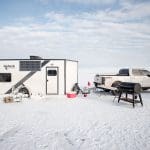
Nothing puts a damper on a successful weekend of ice fishing quite like realizing your skid house has become a permanent part of the frozen lake. It’s a common scenario: you’ve spent days in comfort, the bite was on, and now it’s time to pack up. But when you try to pull away, your skid house doesn’t budge. The ice has claimed your skis in a frozen grip that can feel impossible to break.
Knowing how to safely and efficiently free your skid house is a critical skill for any serious angler. Doing it the wrong way can result in bent tow bars, damaged skis, or even structural stress on your house. Fortunately, with the right tools and a bit of physics, you can get back on the move without a headache.
Why Your Skid House Gets Stuck
Before diving into the “how,” it’s worth understanding the “why.” Ice is a dynamic surface. Even in the dead of winter, the weight of your house exerts pressure on the ice below. If the weather warms up slightly or if there is heavy snow on top of the ice, water can “flood” the surface. This slushy mix eventually refreezes around your skis, creating a powerful bond.
Additionally, the heat from inside your house can radiate downward, slightly melting the top layer of ice under your skis. When you turn the heater off and the temperature drops, that thin layer of water turns into a high-strength adhesive.
Method 1: The Manual Breakout (Chipping Away)
The most straightforward way to unstick your skid house is to manually remove the ice holding it in place. If the freeze isn’t too severe, we’ve found that this might be the only step you need.
Using an ice chisel or a heavy-duty hammer, carefully chip away the ice around the perimeter of the skis. The goal is to create a “relief” zone so the skis have somewhere to move when you apply tension. Be extremely careful not to strike the skis themselves, as metal-on-metal or metal-on-composite impact in sub-zero temperatures can cause chips or structural damage.
If your skid house is only lightly frozen, a few well-placed strikes near the front of the skis might be enough to “pop” the bond. However, for a deep freeze, you’ll need to move on to more mechanical methods.
Method 2: Leverage via the Tow Bar
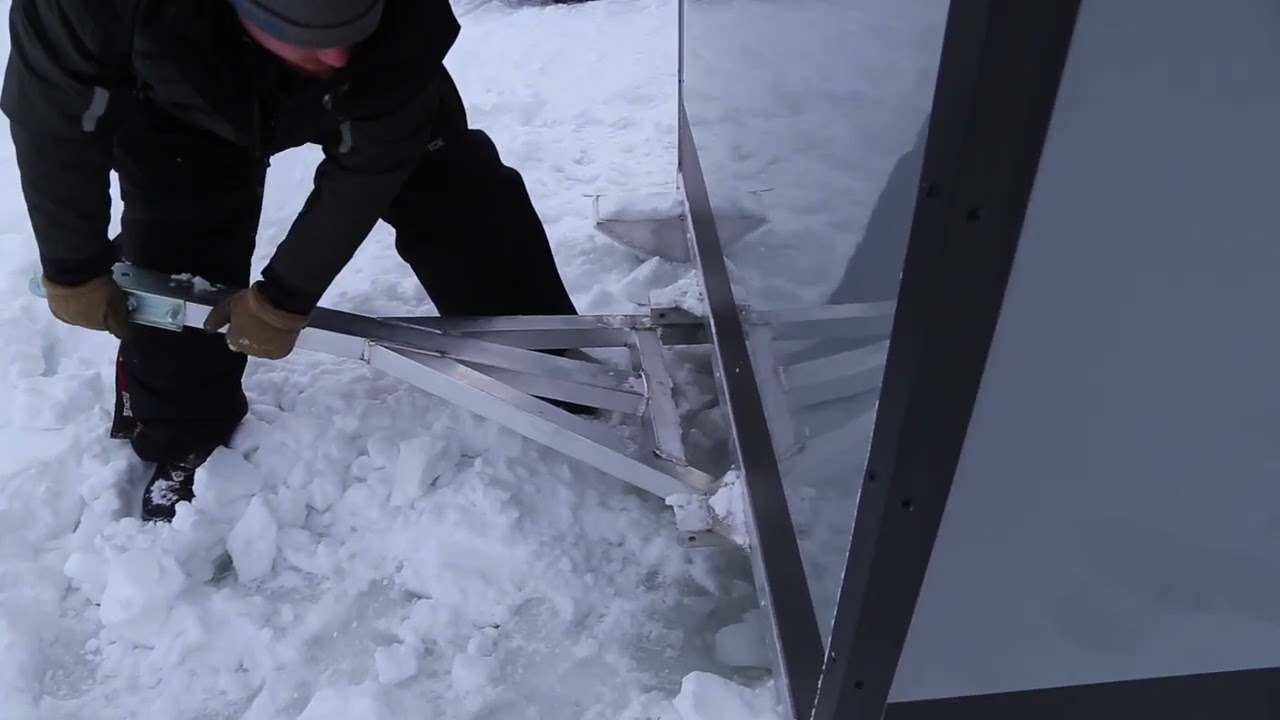
One of the most effective ways to break the ice’s hold is to use leverage. Many anglers overlook the tow bar as a tool for anything other than pulling, but it can actually be your best friend when you’re stuck.
The removable tow bar on an Ambush skid house is designed for durability and versatility. Beyond its primary function, you can use it to provide upward leverage against the ice. By inserting the tow bar and using the ground as a fulcrum, you can apply significant upward pressure to the front of the house. Often, a few inches of lift is all it takes to shatter the ice bond and let the house settle back down on top of the frozen surface rather than inside it.
Method 3: The Power of the Jack
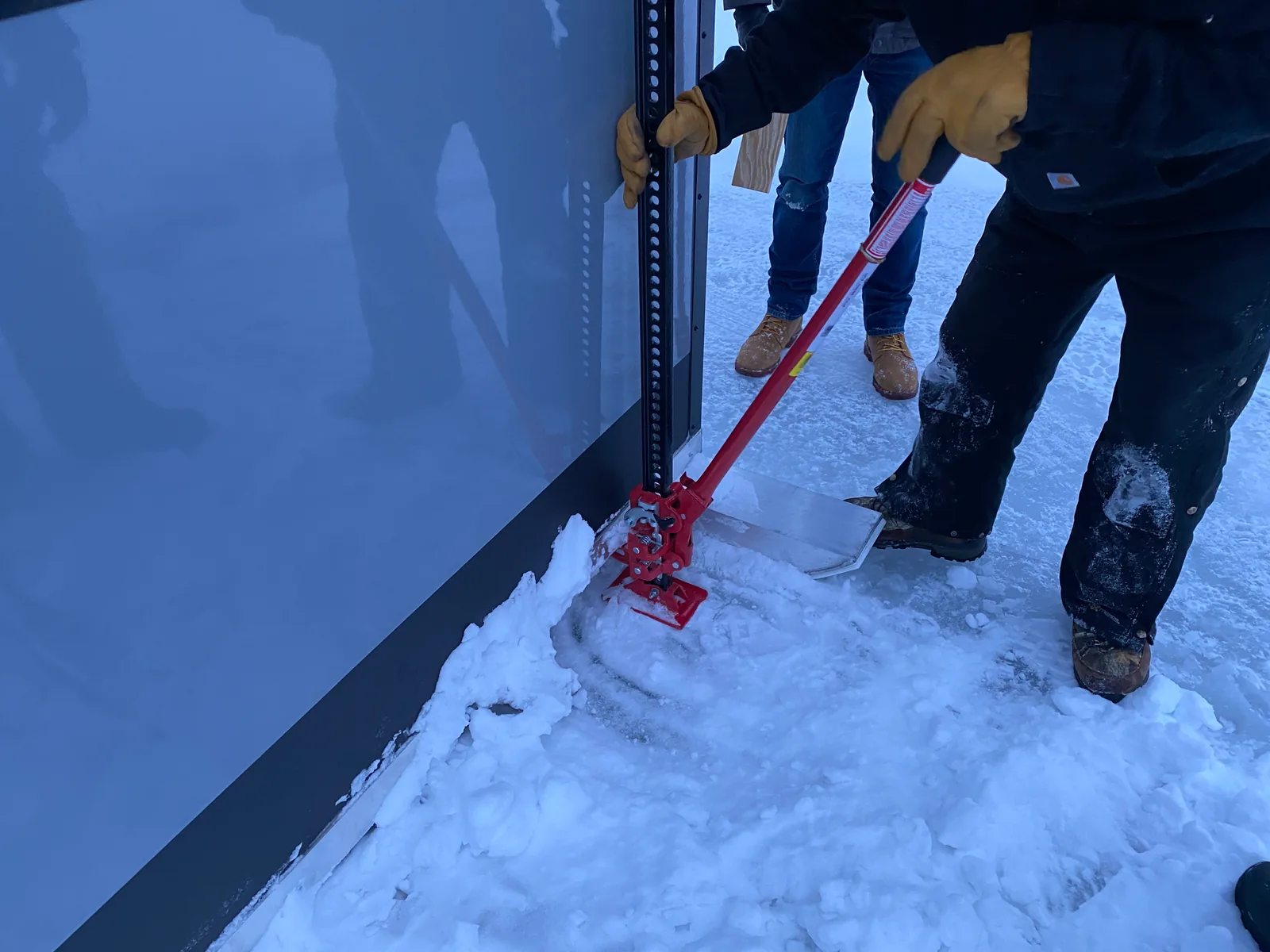
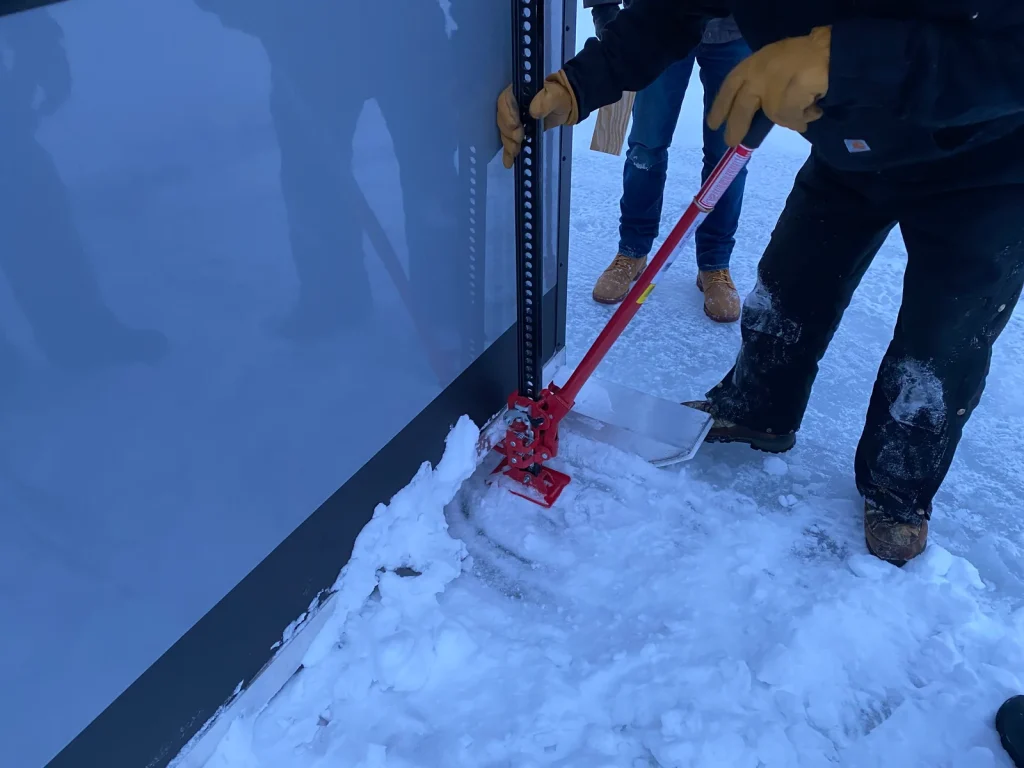
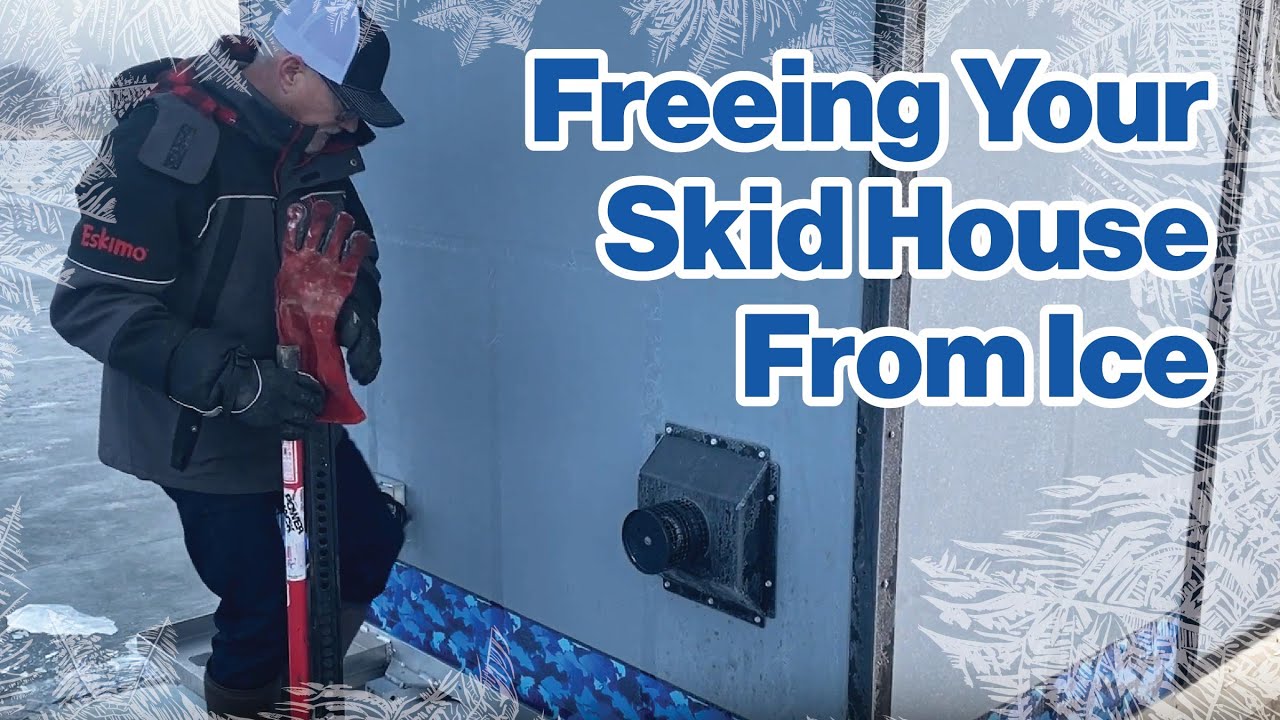
When manual chipping and leverage aren’t enough, it’s time to bring in the heavy hitters. A high-lift jack or a farm jack is an essential piece of equipment for any skid house owner.
By placing a jack at either the front or the back of the house, you can exert thousands of pounds of upward force. Slow, steady pressure is key here. As the jack rises, you’ll likely hear the satisfying “crack” of the ice breaking away from the skis.
Pro Tip from the Ambush Experts: If you’re worried about space, remember that smart design makes a difference. Ambush houses feature convenient under bench storage, which is the perfect place to keep a jack, some wood blocks, and a chisel tucked away and ready for action. You don’t want to be hunting for these tools when the wind is howling and you’re ready to go home.
Watch the tutorial below.
Prevention: The Best Cure for a Stuck House
The easiest skid house to break free is the one that never got stuck in the first place. A few minutes of preventative work when you first set up can save you an hour of hard labor when you leave.
- Block It Up: Always carry a few 2×6 or 2×4 wood blocks. When you reach your fishing spot, jack up each side of the house and slide a wood block under the skis. This keeps the skis themselves out of the slush and floodwater. Even if the wood blocks freeze to the ice, they are much easier to break free than the long surface area of a ski.
- Clear the Slush: If you notice flooding on the ice while you’re fishing, take a moment to clear the slush away from your skis before it has a chance to harden.
- The “Move” Technique: If you plan on leaving your skid house on the ice for several days or weeks, we recommend moving the house on occasion. This could be daily, or weekly, or even monthly depending on temperature and conditions. If you notice a lot of fluctuations in temperature, it is good practice to check on the skid house and make sure everything is in standing order. If you notice the water level rising in your angling holes inside the skid house, this means the skid house, the water, the slush, and the snow is effecting the ice underneath it and it’s time to move. If you notice a lot of drifting of snow this can cause unnecessary weight on the ice and allow water to rise through the angling holes, it is time to move. If you notice anything out of the ordinary, like standing water around the skid house, it’s time to move. It will all come down to temperature and conditions, but it is a good rule of thumb to move the house at least once every couple weeks to keep fresh ice under the skid house.
Essential Gear List for the Ice
To ensure you’re never stranded, keep these items in your skid house at all times:
*Ice Chisel (Spud Bar): For clearing holes and chipping around skis.
*Heavy-Duty Jack: Capable of lifting the weight of your specific house.
*Wood Blocks: Multiple lengths of treated lumber to act as spacers.
*Removable Tow Bar: Ensure it’s easily accessible and not buried under gear.
*Safety Glasses: Chipping ice can send shards flying; protect your eyes!
Safety First
Remember that breaking a skid house free involves a lot of force. Never put your hands or feet under the skis while the house is being jacked up or under tension. Use your tools, trust the physics of leverage, and always work with a partner when possible.
By following these steps—chipping, leveraging with your tow bar, and using a jack when necessary—you can handle even the toughest freeze-ins. With the right preparation and a high-quality skid house designed for the elements, you can focus on the fishing and leave the stress of the “big freeze” behind.